
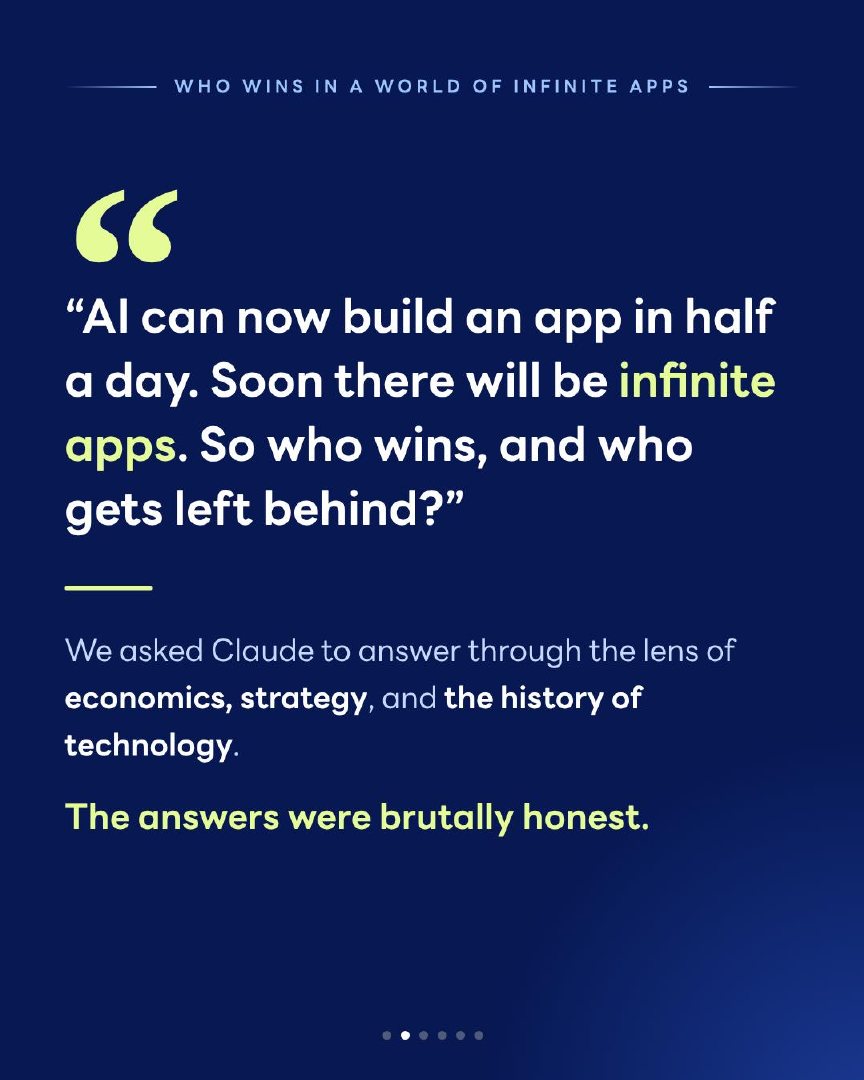
“AI can now build an app in half a day. Soon there will be infinite apps. So who wins, and who gets left behind?”
We asked Claude to answer through the lens of economics, strategy and the history of technology. The answers were brutally honest.
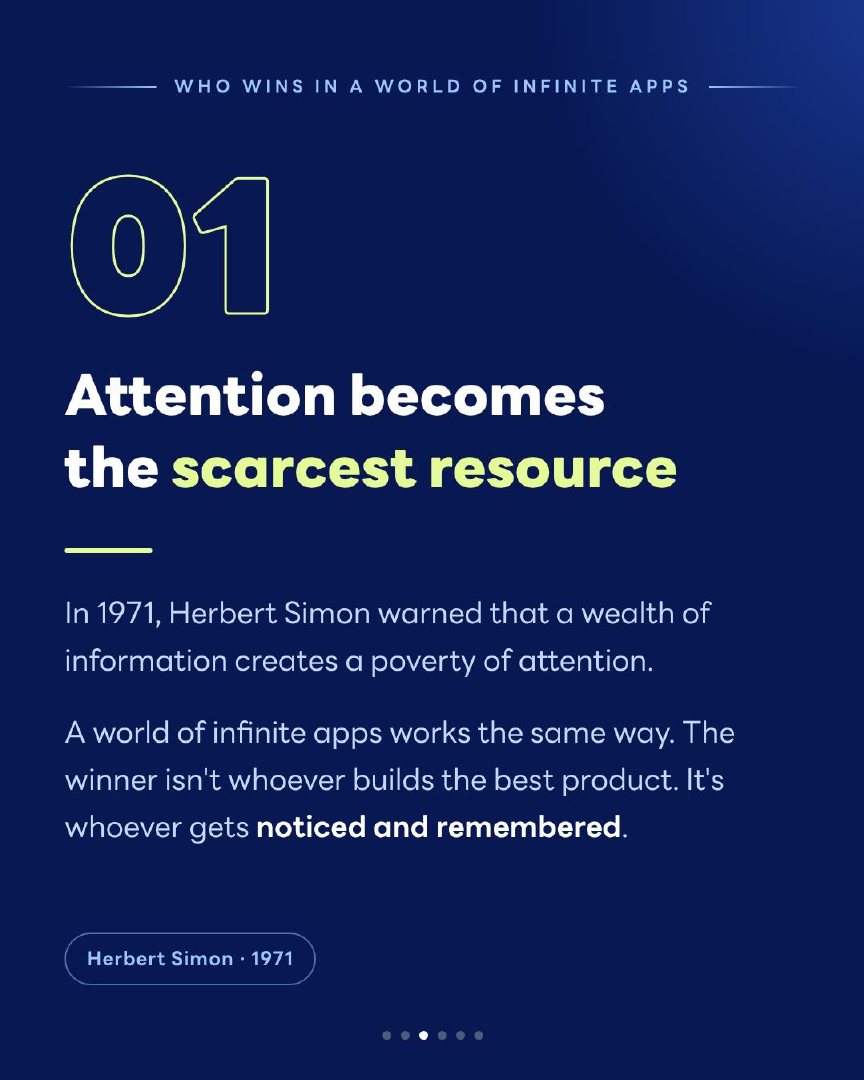
- Attention becomes the scarcest resource. In 1971, Herbert Simon warned that a wealth of information creates a poverty of attention. A world of infinite apps works the same way. The winner isn’t whoever builds the best product; it’s whoever gets noticed and remembered.
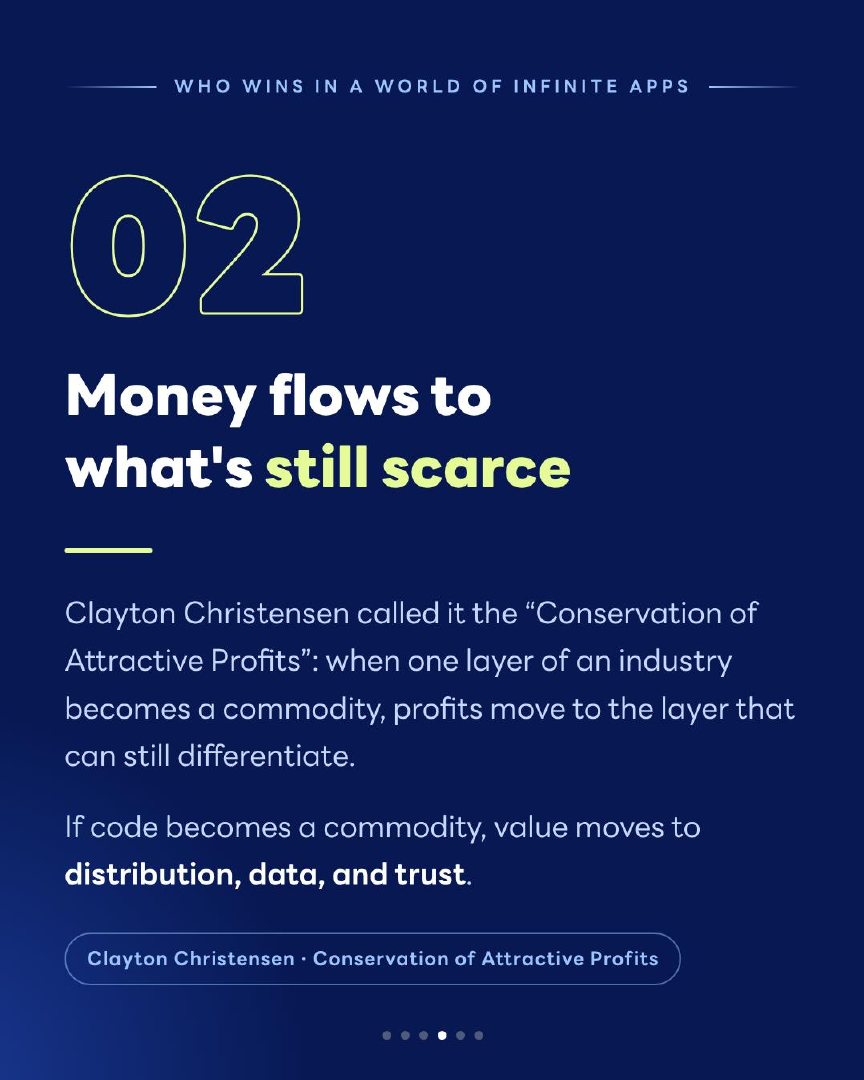
- Money flows to what’s still scarce. Clayton Christensen called it the “Conservation of Attractive Profits”: when one layer of an industry becomes a commodity, profits move to the layer that can still differentiate. If code becomes a commodity, value moves to distribution, data and trust.
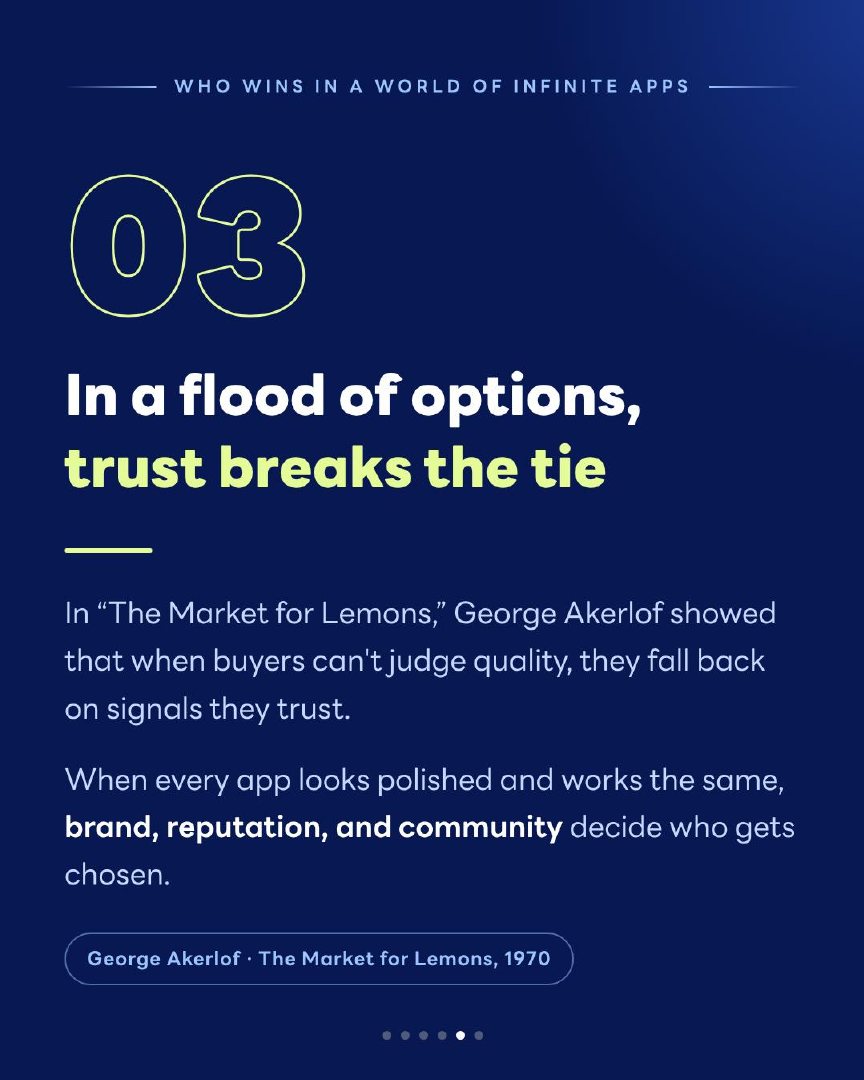
- In a flood of options, trust breaks the tie. In “The Market for Lemons,” George Akerlof showed that when buyers can’t judge quality, they fall back on signals they trust. When every app looks polished and works the same, brand, reputation and community decide who gets chosen.
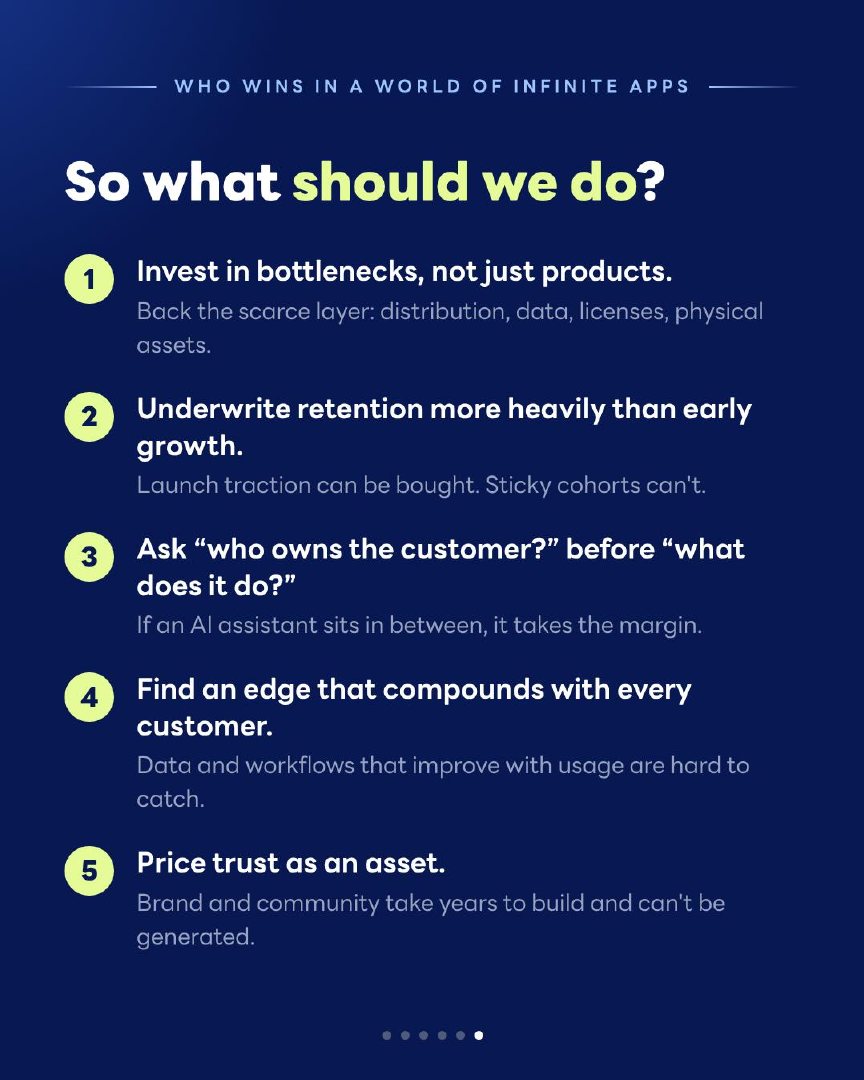
- Invest in bottlenecks, not just products. Back the scarce layer: distribution, data, licenses, physical assets.
- Underwrite retention more heavily than early growth. Launch traction can be bought. Sticky cohorts can’t.
- Ask “who owns the customer?” before “what does it do?” If an AI assistant sits in between, it takes the margin.
- Find an edge that compounds with every customer. Data and workflows that improve with usage are hard to catch.
- Price trust as an asset. Brand and community take years to build and can’t be generated.
References: Herbert Simon (1971); Clayton Christensen, Conservation of Attractive Profits; George Akerlof, “The Market for Lemons” (1970).